Native Plant Spotlight - Oregon Grape (Mahonia aquifolium)
What is Oregon Grape?
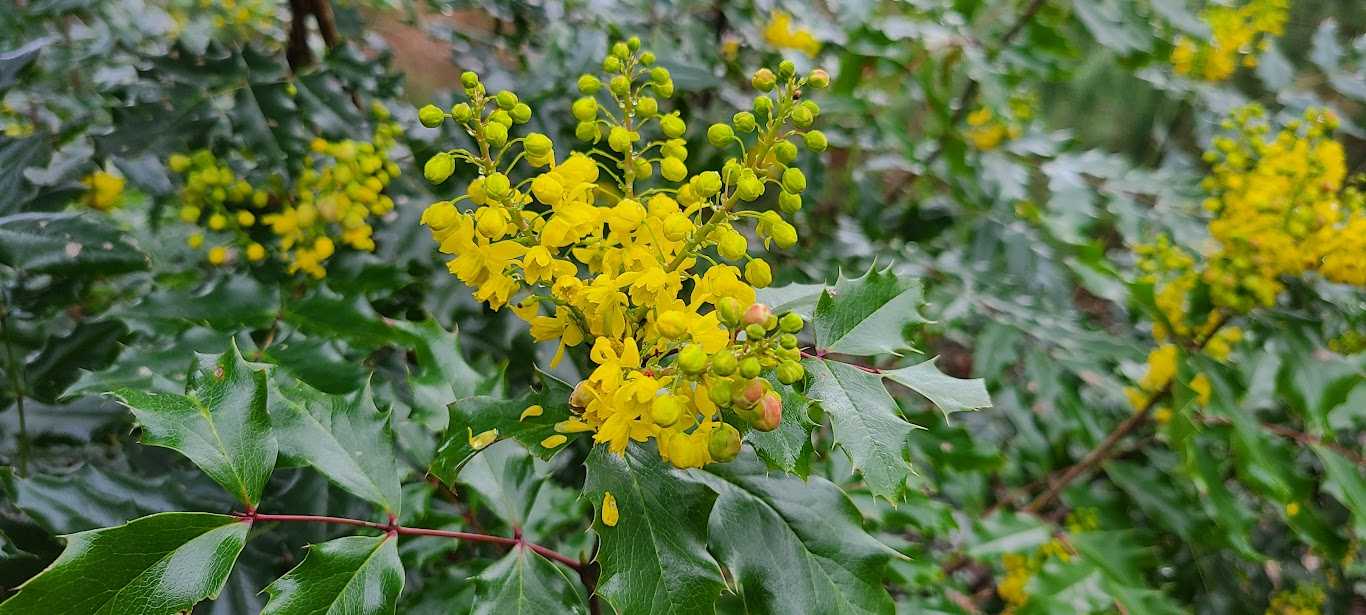
Oregon Grape (Mahonia aquifolium) is a evergreen shrub native to the Pacific Northwest coastal regions. These versatile shrubs are identified by its green stiff leaves that resemble leaves of a holly bush. The plant flowers in late winter/early spring with showy yellow flowers. The roots and stems of the plants are also yellow when cut. The shrub produces purple blue fruits that resemble clusters of grapes. This shrub is a great resource for both people and wildlife. The shrub is used by humans as a food source and natural dye. The shrub also provide great resources for wildlife.
Oregon Grape as a Wildlife Plant
The Oregon grape makes a great habitat shrub in the landscape. The evergreen foliage of the shrub provides cover through out the year. These shrubs also put on a beautiful show of yellow flowers early in the year. This early flower provides pollinators a great pollen and nector source. The fruits ripen in late summer to early fall and provide food for wildlife such as racoons, bears, and many songbirds. This tree is a great evergreen to plant to attract birds and mammals to your backyard.
Plant Growth Habits
The mature plant can reach 2 to 6 ft tall with a spread of 5 ft. The plant produces rhizomes allowing it to spread out underground. Oregon grape is a easy plant to grow due to its tolerant nature. It grows in full sun to full shade. It is drought tolerant and can grow in areas of poor soil. However, it is beneficial to water newly planted shrubs for the first two years while the plant is establishing roots.
Over time Oregon grape can grow unruly. If a tidier more maintained look is desired Oregon grape can be pruned back. Prune in early spring just after flowers have bloomed for the year. For regular pruning practices remove any dead branches. Cut back older stems to a reduced height at a crotch using a heading cut. Reducing the height will help prevent larger stems from leaning over due to height. If a more dramatic pruning is needed, Oregon grape can handle a severe cut back to the ground. However, this will take more time to recover from and can leave the plant in a "awkward faze" for a year.